 |
|
|
|
 |
|
 |
|
 |
|
 |
|
 |
|
 |
|
 |
|
 |
|
 |
|
 |
|
 |
|
 | |
|
 |
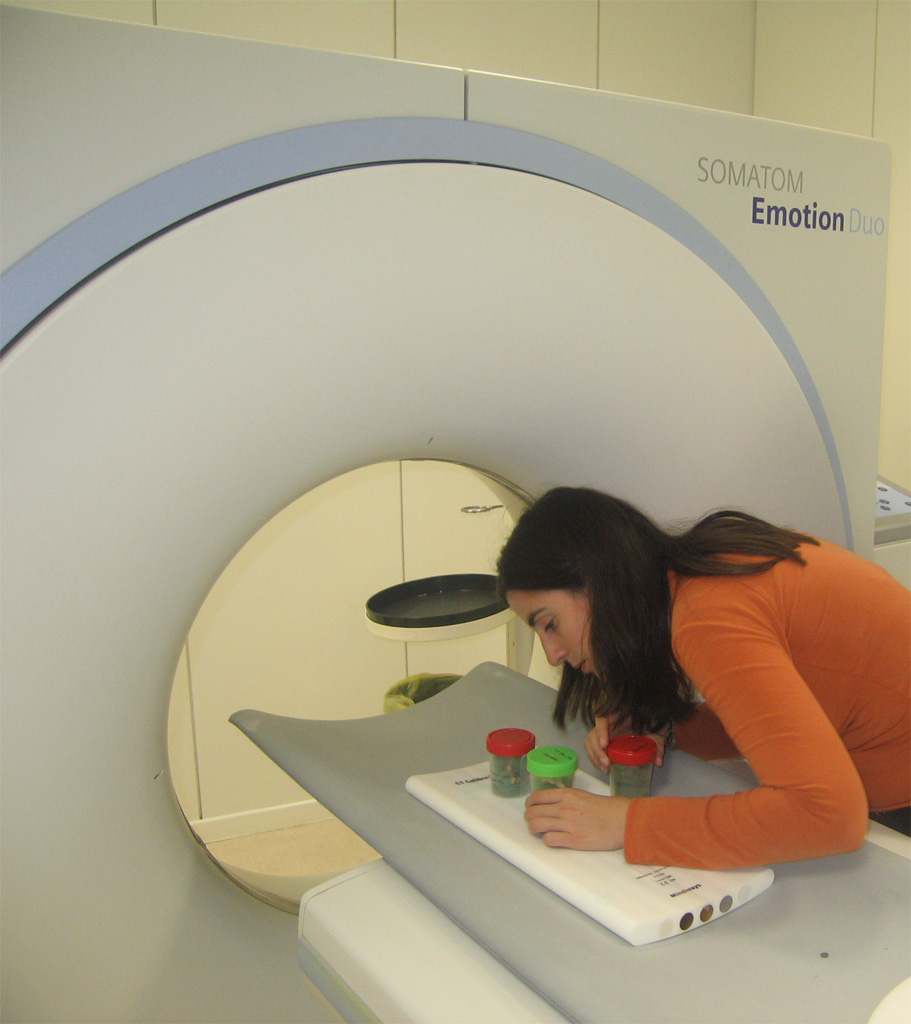 Acoustic trauma and hearing loss in cetaceans Recently, a series of problems has occurred, directly related to sound sources of human origin, for example the increase in cetacean mortality due to collisions with boats, or mass strandings of whales after military manoeuvres. While there is no conclusive evidence concerning the implications that acoustic contamination of middle and low frequencies have on the disorientation and death of these animals, it is widely accepted that the negative effects of the noise provoke irreversible damage to their hearing capacity. The LAB routinely analyses the internal structure of stranded cetacean ears, conceiving and improving continuously the analysing methods. Samples are analysed and processed for histopathological, microbiological, toxicological and parasitological studies, as well as for processing by an electronic microscope and scanning (CT scans and MRI). The results of this investigation, apart from permitting the detection of lesions induced by acoustic source, are modelled and integrated in LAB simulations, with the objective to determine the production, propagation and reception mechanisms of sound, and the pathological effects of anthropogenic noise on these processes. |